INDOAKTUAL, JAKARTA – Choosing a factory location is one of the most important decisions a manufacturing company will ever make. It is not simply about finding available land or securing an affordable property. The right location can influence production efficiency, transportation costs, workforce availability, business continuity, and long-term profitability.

As Indonesia continues to strengthen its position as a regional manufacturing hub, West Java has become an increasingly attractive destination for domestic and international investors. Its established industrial ecosystem, expanding infrastructure, and access to major consumer markets make the province an important consideration for businesses planning their next expansion.


However, with several industrial estates offering different advantages, how can companies identify the right location? Understanding factory site selection criteria, regional development, and industrial estate facilities is the first step toward making a smarter investment decision.
1. What Is Factory Site Selection and Why Is It Important?
Factory site selection is the process of evaluating and choosing the most suitable location for establishing or expanding a manufacturing facility. The process involves assessing several business factors, including land availability, infrastructure, transportation access, labor supply, utilities, environmental considerations, and regulatory requirements.
For manufacturers, choosing the right industrial location can create measurable operational advantages. A factory positioned near suppliers, logistics networks, and skilled workers can reduce delivery times, improve production planning, and support more efficient supply chain management.


In contrast, selecting a location based only on initial land prices may create additional expenses over time. Transportation delays, inadequate utilities, and limited workforce access can gradually increase operational costs.
This is why factory site selection should be treated as a long-term business strategy rather than a simple real estate transaction.
2. Why Is West Java Becoming a Strategic Manufacturing Destination?
West Java has developed into one of Indonesia’s most important manufacturing regions. Its proximity to Jakarta, established industrial clusters, supporting infrastructure, and access to domestic and international markets provide significant opportunities for industrial development.
The province also benefits from the growing Rebana Metropolitan development initiative, which covers seven regencies and cities: Subang, Indramayu, Majalengka, Sumedang, Cirebon, Kuningan, and Cirebon City.
According to Indonesia’s Coordinating Ministry for Economic Affairs, the Rebana region is supported by strategic infrastructure, including Patimban International Port, Kertajati International Airport, toll roads, and designated industrial areas.
This development is creating a wider economic corridor that connects manufacturing activities with logistics, transportation, and regional investment opportunities.
For companies exploring the top industrial parks in West Java, understanding this changing economic landscape is essential. It allows investors to consider not only existing industrial centers but also emerging locations with potential for future growth.
3. Top Industrial Parks in West Java to Consider
West Java offers several industrial estates with different locations, infrastructure capabilities, and business ecosystems. The most suitable choice depends on a company’s manufacturing activities, supply chain requirements, and expansion plans.
A. Suryacipta City of Industry – Karawang
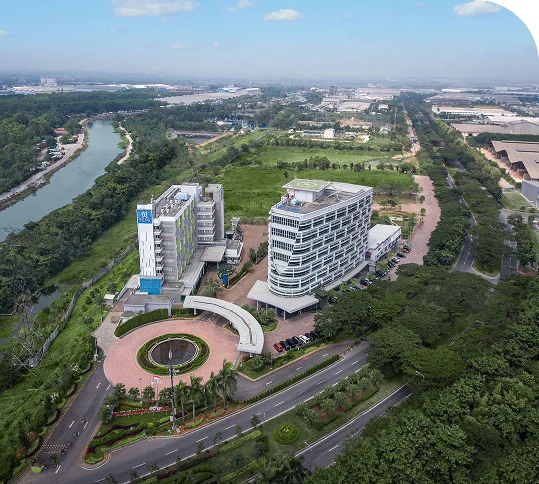
Located in Karawang, Suryacipta City of Industry is an established industrial estate serving manufacturing and industrial businesses.
Karawang is strategically positioned within West Java’s manufacturing corridor, offering access to major transportation networks and supporting industrial activities.
The estate is particularly relevant for companies looking for an established industrial environment with supporting infrastructure and access to the broader Jakarta–Cikampek industrial ecosystem.
B. MM2100 Industrial Town – Bekasi
MM2100 Industrial Town is located in the Cikarang industrial corridor of Bekasi, an established manufacturing destination in West Java.
Its location provides access to major highways, suppliers, logistics providers, and a large industrial workforce.
Businesses evaluating this area may find it relevant when their operations depend on established supplier networks and proximity to the Greater Jakarta market.
C. Jababeka Industrial Estate – Cikarang
Jababeka is another established industrial development in Cikarang, Bekasi.
The area accommodates various industrial and commercial activities, creating an ecosystem that supports manufacturers, service providers, and related businesses.
Its established business environment makes it an important location to include when comparing industrial estates in West Java.
D. Karawang International Industrial City (KIIC) – Karawang
KIIC is a major industrial estate in Karawang that accommodates manufacturing companies across different sectors.
Its location within the Karawang industrial cluster provides access to transportation infrastructure and supporting industrial services.
For businesses considering large-scale manufacturing operations, evaluating the estate’s available land, utilities, infrastructure, and tenant ecosystem can help determine its suitability.
E. Subang Smartpolitan – Subang
Subang is emerging as an important industrial destination in West Java, supported by the development of the Rebana Metropolitan area and its connection to major logistics infrastructure.
One development attracting attention is Subang Smartpolitan, an integrated smart and sustainable industrial township developed by Suryacipta.
The development is designed to accommodate various industries, including automotive and components, electric vehicle supply chains, electronics, consumer goods, logistics, pharmaceuticals, and data centers.
Its strategic position near Patimban International Port, Kertajati International Airport, and the Trans-Java Toll Road makes Subang an interesting option for companies looking to strengthen logistics connectivity and plan future expansion.
For manufacturers evaluating emerging industrial locations, top industrial parks in West Java provides a useful starting point for exploring Subang Smartpolitan and its industrial development opportunities.
4. What Factors Should Companies Consider When Selecting a Factory Site?
Identifying an attractive industrial estate is only the beginning. Companies should conduct a detailed assessment before making a final investment decision.
Here are six practical factors worth considering.
1. Strategic Location and Transportation Access
Evaluate the distance between the proposed factory and major suppliers, customers, ports, airports, and distribution centers.
For export-oriented manufacturers, access to seaports can influence shipping schedules and logistics expenses. Businesses serving domestic markets should also consider toll road connectivity and access to major consumption centers.
2. Land Availability and Expansion Potential
A factory should support both current production requirements and future business growth.
Consider the available land size, plot configuration, zoning compatibility, land ownership documentation, and opportunities for expansion.
Choosing an industrial estate with sufficient development potential can reduce the complexity of relocating operations when production capacity increases.
3. Utilities and Supporting Infrastructure
Reliable electricity, industrial water, gas, telecommunications, wastewater treatment, drainage, and internal road networks are essential for manufacturing operations.
Companies should request technical specifications and confirm actual service capacity rather than relying solely on general infrastructure descriptions.
4. Workforce Availability
Labor availability is another important consideration.
Assess the local workforce’s size, technical capabilities, wage structure, vocational education ecosystem, and accessibility for employees.
A location with access to relevant talent can support recruitment, training, and long-term workforce development.
5. Regulatory and Environmental Compliance
Before purchasing industrial land, confirm the applicable zoning, environmental requirements, building permits, and relevant business licensing procedures.
Companies should also evaluate wastewater management, pollution control, energy efficiency, and environmental management systems.
These considerations are increasingly important for businesses working with international customers and ESG requirements.
6. Total Cost of Ownership
Do not evaluate a factory site based solely on its land acquisition price.
Calculate the total cost of ownership, including land, construction, utilities, transportation, labor, maintenance, permits, and potential expansion.
A location with a slightly higher initial investment may offer better long-term value if it improves productivity and reduces recurring logistics expenses.
5. Why Subang Smartpolitan Deserves Attention
Subang is becoming an increasingly relevant location for companies looking beyond established manufacturing clusters.
Its strategic position within the Rebana Metropolitan corridor connects industrial development with important transportation infrastructure.
Subang is approximately 89 kilometers east of Jakarta and benefits from access to several major infrastructure projects.
These include Patimban International Port, Kertajati International Airport, the Trans-Java Toll Road, and regional rail connectivity.
The location also provides access to a growing manufacturing supply chain and a substantial potential workforce.
Subang Smartpolitan is designed to support businesses through integrated industrial infrastructure and a sustainable township concept.
Its facilities include telecommunications, electricity, industrial water, gas, wastewater treatment, internal road networks, stormwater drainage, security, and fire protection.
This integrated approach can help manufacturers improve logistics efficiency, support productivity, manage operational costs, and address environmental considerations.
For businesses searching for the best industrial estate in Indonesia, Suryacipta offers an industrial development platform with experience in Karawang and an expanding presence in Subang.
6. How to Conduct a Practical Factory Site Selection Process
A structured evaluation process helps companies avoid unnecessary investment risks.
Step 1: Define your manufacturing requirements.
Identify the required land area, building specifications, production capacity, utility demand, workforce requirements, and environmental standards.
Step 2: Map your supply chain.
List your major suppliers, customers, distribution centers, and export destinations. Identify which transportation routes matter most to your daily operations.
Step 3: Shortlist suitable industrial estates.
Compare locations in Karawang, Bekasi, Purwakarta, and Subang based on your operational priorities.
Step 4: Conduct on-site inspections.
Visit shortlisted estates to evaluate actual road conditions, surrounding infrastructure, utilities, accessibility, and development progress.
Step 5: Perform financial and legal due diligence.
Review land documentation, zoning, permits, utility agreements, construction costs, and long-term operational expenses.
Step 6: Evaluate future scalability.
Consider whether the location can accommodate additional production lines, warehouses, supporting facilities, or future business diversification.
A thorough site selection process should involve management, engineering, logistics, finance, legal, and environmental teams.
7. When Is the Right Time to Invest in an Industrial Estate?
The right time to secure an industrial location depends on business readiness, market demand, and infrastructure development.
Companies planning to enter Indonesia should begin evaluating locations before their intended production launch. Early preparation allows more time for feasibility studies, licensing, construction planning, and supply chain coordination.
For existing manufacturers, expansion opportunities should be assessed when production capacity approaches its limits or when current logistics arrangements become less efficient.
Emerging industrial corridors such as Subang also deserve attention from businesses planning long-term growth. Evaluating these locations early can help companies understand land availability, infrastructure readiness, and future development opportunities.
Conclusion: Choose a Location That Supports Long-Term Growth
Factory site selection is about finding a location that supports the entire manufacturing operation, not simply purchasing industrial land.
West Java offers several industrial destinations, from established manufacturing centers in Bekasi and Karawang to emerging opportunities in Subang.
Each location has different advantages, and the right choice depends on a company’s production requirements, logistics strategy, workforce needs, infrastructure expectations, and long-term investment objectives.
As Indonesia’s industrial landscape continues to expand toward the Rebana Metropolitan corridor, Subang Smartpolitan presents an opportunity for manufacturers looking to connect their operations with a developing industrial ecosystem.
With the right location, infrastructure, and planning, businesses can build a stronger foundation for operational efficiency, sustainable development, and long-term growth in Indonesia.