Industrial land investment has become an increasingly attractive option for businesses and investors seeking long-term growth.

With manufacturing expansion, supply chain transformation, and infrastructure development accelerating across many regions, industrial properties continue to attract strong interest from both domestic and international investors.


However, selecting the right industrial land is not simply about finding available property at a reasonable price.
Factors such as location, infrastructure readiness, accessibility, labor availability, and future development plans can significantly influence investment performance over time.
In this guide, you’ll learn what industrial land investment is, the factors that drive its value, the risks investors should understand, and how to evaluate opportunities that offer sustainable long-term returns.


Why Location Matters in Industrial Land Investment
When evaluating any industrial property, location is often the first factor that deserves attention. A strategic site can improve operational efficiency, attract tenants, and support future appreciation.
What Is Industrial Land Investment?
Industrial land investment refers to the acquisition of land designated for industrial activities such as manufacturing, warehousing, logistics, distribution, and supporting industrial services.
Unlike residential or commercial real estate, industrial land is primarily valued based on its ability to support business operations.
Factors such as transportation access, utility availability, zoning regulations, and proximity to industrial ecosystems often play a larger role in determining value.
Why Site Selection Often Determines Investment Success
A well-positioned industrial property can create long-term advantages for investors and tenants alike.
Accessibility
Industrial facilities rely heavily on the efficient movement of goods. Locations with direct access to highways, ports, railways, and airports often attract stronger demand.
Infrastructure
Reliable roads, utilities, and telecommunications networks reduce operational challenges and support business continuity.
Tenant and Business Demand
Industrial clusters tend to attract manufacturers, logistics providers, and suppliers that benefit from being located near each other.
Future Growth Potential
Areas with planned infrastructure developments or government-supported industrial expansion programs may experience stronger land value appreciation over time.
What Types of Industrial Land Investments Are Available?
Industrial land opportunities vary depending on development status and intended use. Understanding the differences can help investors align opportunities with their goals and risk tolerance.
Developed Industrial Land
Developed industrial land is typically located within established industrial estates and already includes essential infrastructure such as roads, drainage systems, utilities, and regulatory approvals.
Advantages:
- Faster project implementation
- Lower infrastructure development costs
- Reduced regulatory complexity
- Greater appeal to tenants and industrial operators
Undeveloped Industrial Land
Undeveloped industrial land offers investors the opportunity to acquire property before major development occurs.
Advantages:
- Potentially lower acquisition costs
- Greater upside if surrounding infrastructure improves
- Flexibility in future development planning
Considerations:
- Longer development timelines
- Additional infrastructure investment
- Higher regulatory and permitting requirements
Ready Industrial Sites vs Build-to-Suit Locations
Ready industrial sites are designed for businesses seeking immediate operational readiness, while build-to-suit locations allow facilities to be customized according to specific operational requirements.
Ready sites often appeal to companies prioritizing speed and efficiency, whereas build-to-suit projects are favored by organizations with specialized production or logistics needs.
Which Factors Have the Biggest Impact on Investment Value?
Several variables directly influence the performance and long-term value of industrial land investment.
Transportation and Logistics Access
Industrial businesses depend on efficient supply chains.
Key considerations include:
- Proximity to seaports
- Access to major highways
- Availability of rail freight services
- Connectivity to distribution centers
- Access to airports for high-value cargo
The easier goods can move in and out of a site, the more attractive it becomes to potential occupants.
Infrastructure Readiness
Infrastructure readiness often determines how quickly a property can generate value.
Investors should evaluate:
- Internal road networks
- Drainage systems
- Internet connectivity
- Utility connections
- Environmental management systems
Workforce Availability
Access to a skilled and reliable workforce is critical for industrial operations.
Consider factors such as:
- Local labor supply
- Nearby population centers
- Educational institutions
- Vocational training facilities
- Workforce mobility
Utilities and Operational Efficiency
Industrial operations require dependable utilities to maintain productivity.
Investors should assess:
- Electricity reliability and capacity
- Water availability
- Waste management systems
- Telecommunications infrastructure
- Renewable energy opportunities
How Do Investors Measure Potential Returns?
Successful investors evaluate both current and future value drivers before making a decision.
Understanding Capital Appreciation
Capital appreciation refers to the increase in land value over time.
Industrial land located near expanding infrastructure projects, growing industrial corridors, and emerging logistics hubs may experience stronger appreciation compared to less strategic locations.
Evaluating Rental Income Potential
Industrial properties can generate recurring income through leasing arrangements.
Investors should examine:
- Current rental rates
- Occupancy trends
- Tenant demand
- Lease duration
- Industrial sector growth forecasts
Comparing Short-Term and Long-Term Returns
Short-term gains may come from rising land prices, while long-term returns often depend on sustained tenant demand and ongoing industrial development.
Balancing both perspectives can help create a more resilient investment strategy.
Looking Beyond Land Acquisition Costs
Purchase price is only one component of total investment costs.
Additional expenses may include:
- Infrastructure upgrades
- Permit applications
- Environmental assessments
- Legal due diligence
- Property management costs
- Utility installation fees
Understanding the full cost structure provides a more accurate picture of expected returns.
What Common Mistakes Should Investors Avoid?
Even experienced investors can overlook factors that significantly affect performance.
Focusing Only on Purchase Price
A lower purchase price does not automatically mean a better investment. Strategic location and infrastructure quality often have a greater influence on long-term value.
Ignoring Infrastructure Plans
Future transportation projects, industrial estate expansions, and government development initiatives can dramatically impact property performance.
Underestimating Regulatory Requirements
Investors should carefully review zoning regulations, environmental compliance requirements, permits, and land ownership documentation before proceeding.
Overlooking Long-Term Demand Trends
Industrial demand evolves alongside changes in manufacturing, e-commerce, logistics, and technology. Understanding future market trends can help investors identify sustainable opportunities.
What Risks Can Affect Industrial Property Performance?
Like any investment, industrial land carries potential risks.
Economic Slowdowns
Reduced industrial activity can temporarily lower demand for industrial space and delay expansion plans.
Regulatory and Policy Changes
Changes in regulations, taxation, environmental policies, or land-use requirements may affect investment performance.
Market Oversupply
Excessive industrial development in a specific region can create increased competition and slower occupancy growth.
Shifting Industrial Demand
Technological changes and evolving supply chains can alter the attractiveness of certain industrial locations over time.
How Can Investors Conduct Effective Due Diligence?
Thorough due diligence helps reduce uncertainty and supports better decision-making.
Research Local Market Conditions
Analyze industrial demand, occupancy levels, rental trends, and infrastructure developments in the target market.
Review Land Ownership and Permits
Verify legal ownership, zoning compliance, permits, and any restrictions that may impact future development.
Assess Infrastructure Development Plans
Review government and private-sector infrastructure projects that could influence future accessibility and property value.
Evaluate Long-Term Growth Potential
Consider demographic trends, industrial expansion plans, logistics activity, and economic development initiatives that may support sustained growth.
Why Industrial Parks Often Attract Long-Term Investment Interest
Many investors prefer industrial parks because they provide a more complete business environment compared to standalone industrial sites.
Integrated Infrastructure Advantages
Industrial parks typically offer pre-built infrastructure, reducing development risk and accelerating project implementation.
Operational Efficiency for Businesses
Businesses can benefit from shared facilities, streamlined logistics, and access to supporting services within the same ecosystem.
Scalability Opportunities
Companies can expand operations more easily when additional land and facilities are available within the same industrial area.
Stronger Long-Term Demand Drivers
Industrial parks often attract a diverse mix of manufacturers, logistics operators, and supporting industries, helping create a sustainable demand environment.
Why Suryacipta and Subang Smartpolitan Stand Out for Industrial Land Investment
Evaluating industrial land investment opportunities requires more than comparing land prices. Investors must consider accessibility, infrastructure readiness, workforce availability, regulatory certainty, and long-term growth potential.
For businesses seeking a strategic industrial location in Indonesia, choosing an established industrial park can help reduce risk while supporting long-term operational success.
As one of Indonesia’s leading developers and operators of industrial estates, Suryacipta offers integrated industrial solutions designed to support business growth.
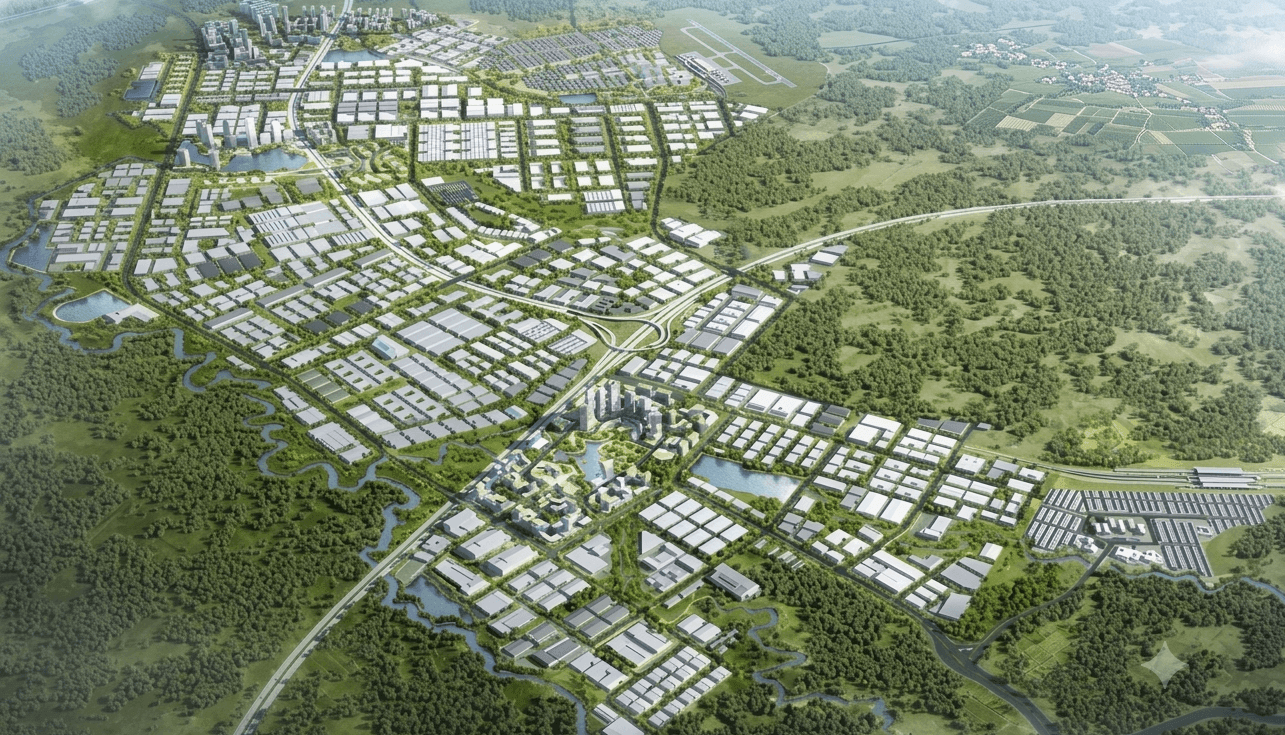
Through its flagship development, Subang Smartpolitan, investors gain access to a 2,717-hectare smart and sustainable industrial city built around the concept of Live, Work, Learn, and Play.
Located approximately 89 kilometers east of Jakarta, Subang Smartpolitan enjoys strategic connectivity to major infrastructure assets, including:
- Patimban Seaport
- Kertajati International Airport
- Trans Java Toll Road
- Passenger and cargo railway networks
- Jakarta–Surabaya High-Speed Rail corridor
The development combines industrial, commercial, residential, educational, and entertainment components within one integrated ecosystem, making it an attractive destination for future-focused businesses and investors.
Looking for a strategic industrial land investment opportunity in Indonesia? Explore Suryacipta’s integrated industrial park solutions and discover how Subang Smartpolitan can support your long-term business growth.
FAQ
1. What is industrial land investment?
Industrial land investment refers to purchasing land designated for industrial activities such as manufacturing, logistics, warehousing, and distribution with the objective of generating long-term value through appreciation, leasing, or development.
2. What factors affect industrial land value?
Key factors include location, transportation access, infrastructure quality, utility availability, workforce accessibility, regulatory conditions, and future development plans.
3. How do investors evaluate industrial property ROI?
Investors typically assess capital appreciation potential, rental income opportunities, occupancy demand, operating costs, infrastructure readiness, and long-term market growth prospects.
4. What risks should investors consider before buying industrial land?
Common risks include economic downturns, regulatory changes, market oversupply, infrastructure delays, and shifts in industrial demand patterns.
5. Why do industrial parks attract investors?
Industrial parks offer integrated infrastructure, operational efficiency, regulatory support, scalability opportunities, and strong tenant demand, making them attractive for long-term investment strategies.