Indoaktual.com – Heat rejection and coolant servicing are easily overlooked in a small parking-area layout. This is a familiar challenge in high-power charging projects, where decisions made early can restrict operation for years. Capital budgets focus attention on the equipment delivered at handover, while most of the risk accumulates over years of operation. A realistic plan brings those later costs into the first design review.
Design Heat Rejection

Liquid cooling moves heat; it does not make heat disappear. The location of cooling equipment, airflow to heat exchangers and ambient temperature affect performance. Electrical designers and civil teams should review clearance and service access together. A congested installation can be more difficult to maintain than an equally powerful system with a better layout.


Review Fluid Maintenance
Cooling loops introduce components that require inspection, monitoring and skilled service. Specify acceptable fluid quality, leak detection, maintenance intervals and isolation arrangements according to the manufacturer’s instructions. Service responsibilities should be clear when the cooling unit and charger are supplied by different vendors. A sealed-looking cabinet is not automatically maintenance-free.
Before signing off the design, place a liquid cooled charging station inside the complete system architecture and assign ownership of each interface. Cooling loops, dispenser placement and power sharing have to fit the site electrical design.
Check Grid and Tariff Exposure
Ultra-fast stations place concentrated demand on the local electricity supply. The transformer, connection agreement and demand charges may be more important to profitability than a small change in conversion efficiency. Storage or demand management may help in some cases, but the economics need hourly modeling. A high utilization forecast should never replace utility confirmation.

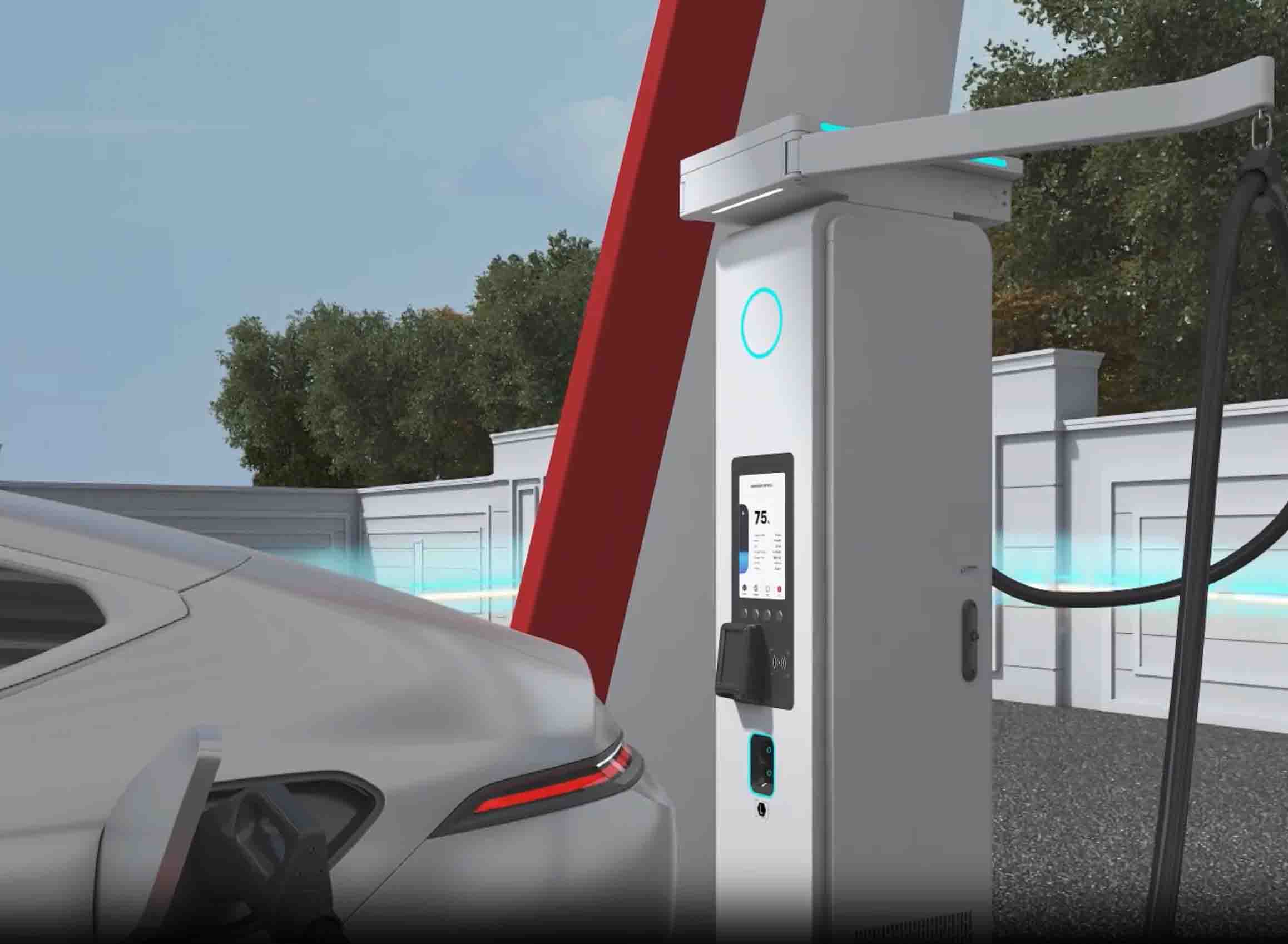
Heat rejection and coolant servicing are easily overlooked in a small parking-area layout.
Plan Fault Isolation
Power electronics, dispensers and cooling equipment can fail independently. The site should isolate affected equipment without unnecessarily disabling all charging bays where the architecture permits it. Remote diagnostics must identify what a technician needs to bring. Contracts should define the service workflow during peak travel periods.
Keep Vehicle Limits in View
Charging power is negotiated between station and vehicle and typically changes during the session. Battery temperature, state of charge and model-specific acceptance limits affect the result. Peak connector ratings should therefore be accompanied by realistic charging curves. Operators can improve trust by publishing clear guidance without promising the same speed to every driver.
The procurement decision around a liquid cooled charging station deserves a comparison of risk, cost and long-term serviceability. Request thermal-performance evidence and an accessible maintenance plan.
Design for Large Vehicles
A heavy vehicle needs room for turning, reversing and service access while connected. Port locations, cable weight and overhead clearances can rule out layouts that work for passenger cars. Safety planning must account for employees walking around parked trucks at night. Drivers should be able to connect without awkward handling or blocking another bay.
A project team can use background on liquid cooled charging station to frame the next vendor discussion, while keeping local rules and grid constraints in view.